
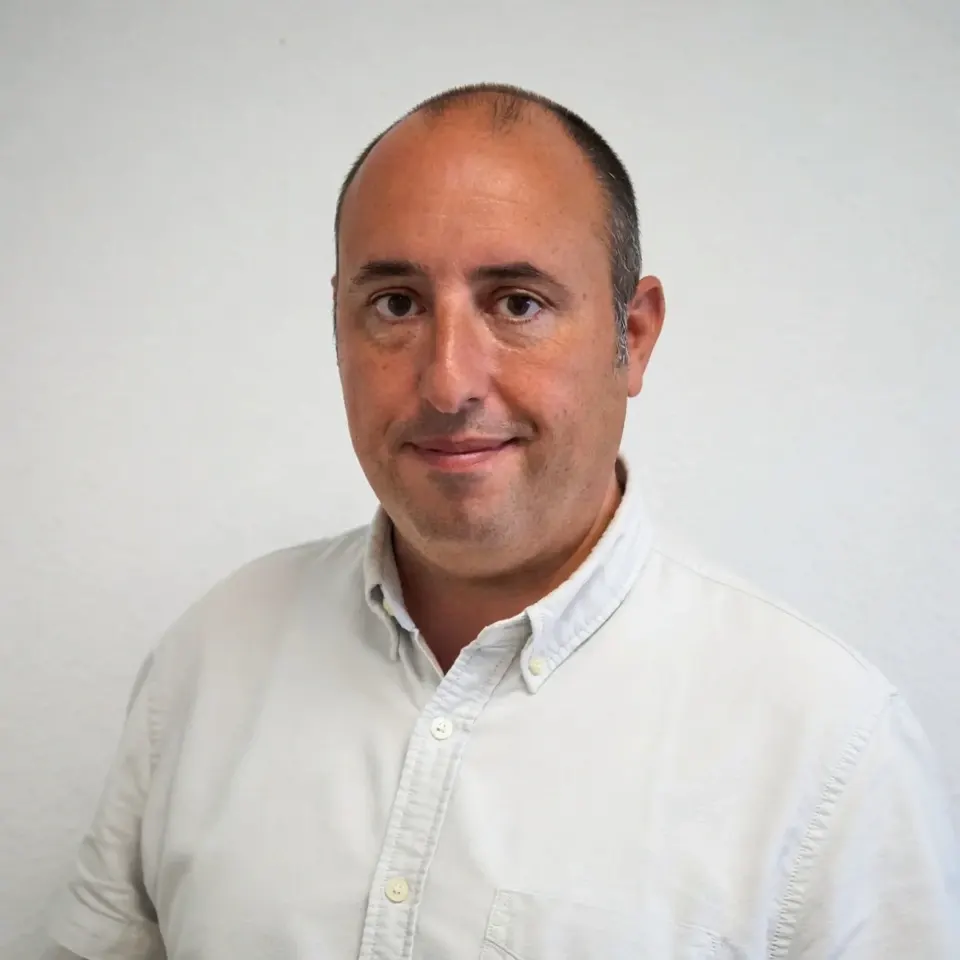
Raúl Moreno Montaña has taken office this Tuesday as the new councillor for Social Rights and Inclusion, succeeding Mònica Martínez Bravo. His first official act was the inauguration of a residence and day centre for people with disabilities in Terrassa.
The new councillor for Social Rights and Inclusion, Raúl Moreno Montaña, has begun his term with a very symbolic act: the opening of a residence and day centre for people with disabilities in Terrassa. The facility, located in the Can Jofresa neighbourhood, offers 60 residential places and 30 day centre places, and has involved an investment of €8.5 million.
A transition agreed with the president
Moreno replaces Mònica Martínez Bravo, who left the position at her own request to return to the academic world. The departure, announced on Monday, came after an agreement with president Salvador Illa. Martínez Bravo, a doctor from MIT, had balanced her work in the Govern with her home in Madrid, and leaves a department marked by the management of the DGAIA scandal and waiting lists for dependency services.
The new councillor, born in Santa Coloma de Gramenet and graduated in Social Education, had already been serving as the general secretary of the department since 2024. Previously, he was the deputy spokesperson for the PSC in the Parlament during the opposition to the Govern of Pere Aragonès. Illa has highlighted his technical profile and knowledge of the department, describing him as the "muscle" of the councillorship in the last two years.
First act in Terrassa
The inauguration of the residence in Terrassa is not coincidental. The new facility, managed by the Fundació Viver de Bell-lloc, responds to the need for public places for people with disabilities in the Vallès Occidental. The mayor of Terrassa, Alba Barnusell, accompanied Moreno at the event and emphasised that the city "needed a resource of this kind for years".
The centre, which has already started receiving its first residents, features adapted spaces, therapeutic gardens, and a team of 45 professionals. For the residents of Terrassa, it represents a response to the demand for specialised care without having to travel to other municipalities. "It is an important day for the city", Barnusell stated.
Continuity in social policies
During the inauguration ceremony, Illa wanted to send a "message of stability and continuity". He assured that social rights policies will continue along the same lines as before, focused on equal pay for sector workers and updating the service portfolio. Moreno, for his part, has taken on the role with the commitment to "leave no one behind".
The new councillor has participated in recent months in some of the most significant reforms of the department, such as the equalisation of working conditions for workers in residences and centres for childhood, disability, and mental health. He has also promoted the updating of the social services portfolio, a long-standing demand from the sector.
With a budget of €4.248 billion for 2026, the department of Social Rights and Inclusion is the third largest in economic weight within the Govern. Moreno will also have to manage the implementation of the programme against child poverty in vulnerable neighbourhoods, recently announced by the Executive.
The profile of the new councillor
Raúl Moreno, 45, is a low-profile politician but with a solid background in the social field. A graduate in Social Education, he has worked on employment insertion and social housing projects before jumping into institutional politics. His discreet style contrasts with the media exposure of his predecessor, but the Govern is confident that his knowledge of the department will ensure a smooth transition.
In fact, Moreno has already demonstrated his management ability at the head of the general secretariat, where he coordinated the response to the DGAIA crisis and negotiated with sector employers. His appointment also strengthens the presence of the PSC in the Govern, at a time when Illa seeks to consolidate his executive for the second half of the legislature.
The residence in Terrassa, which will gradually open its doors in the coming weeks, is just the first of the challenges facing the new councillor. In the coming months, he will need to address the reduction of waiting lists for dependency services, which affect thousands of Catalan families, and the modernisation of childhood care centres. For users and their families, the opening of this centre in Terrassa is a relief: "Finally, we have a resource close to home," explains one of the first families to visit the facilities.
You may also like


